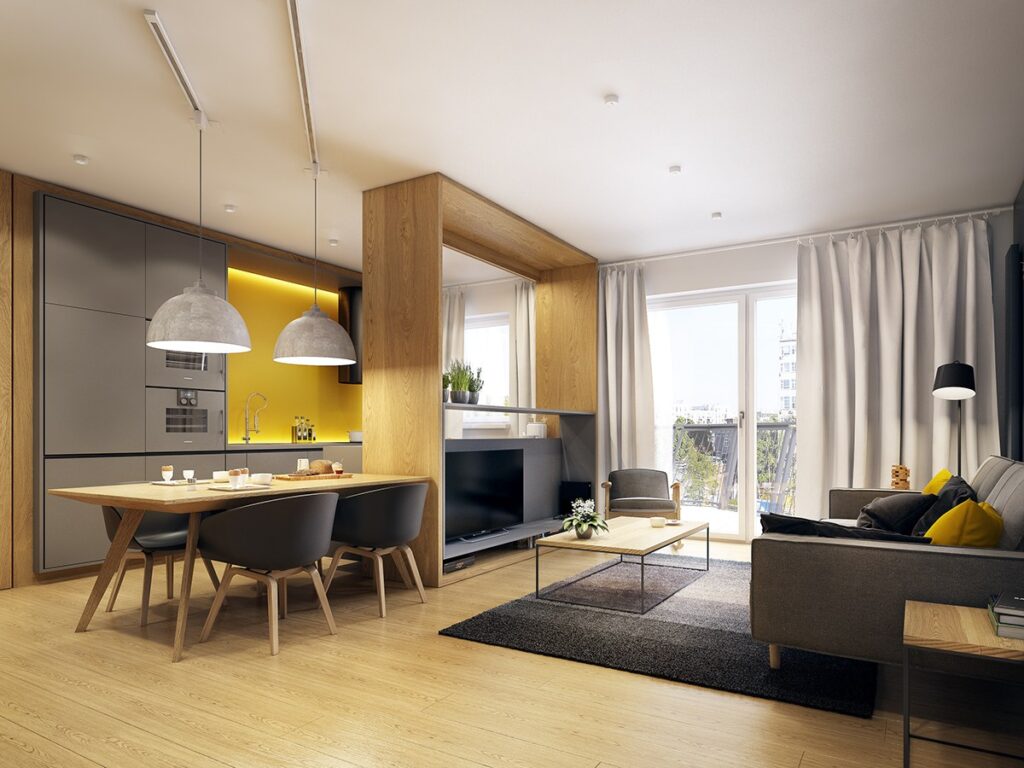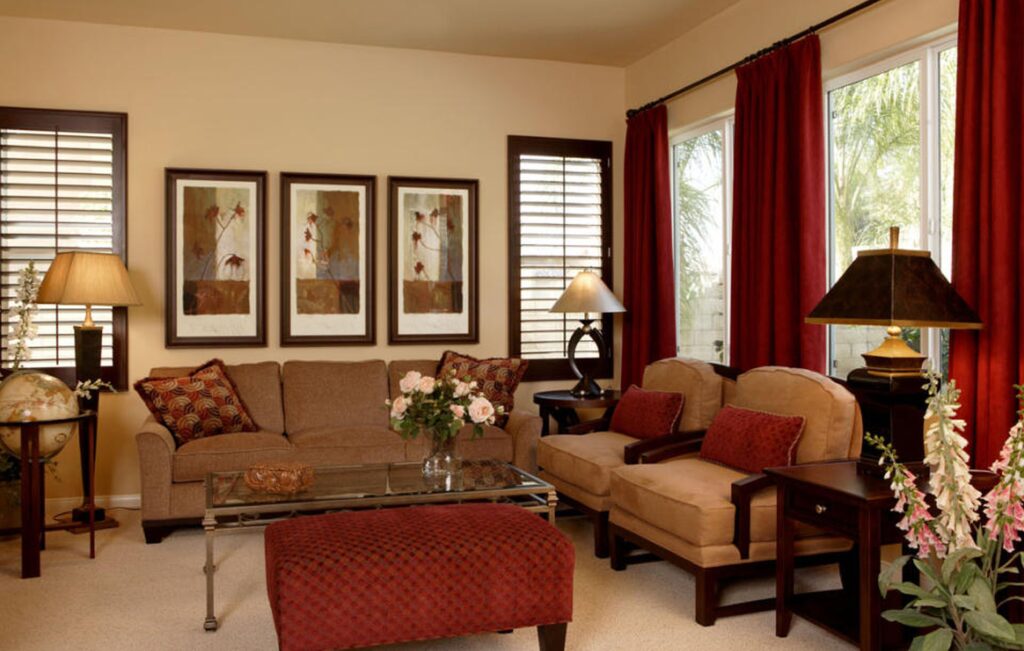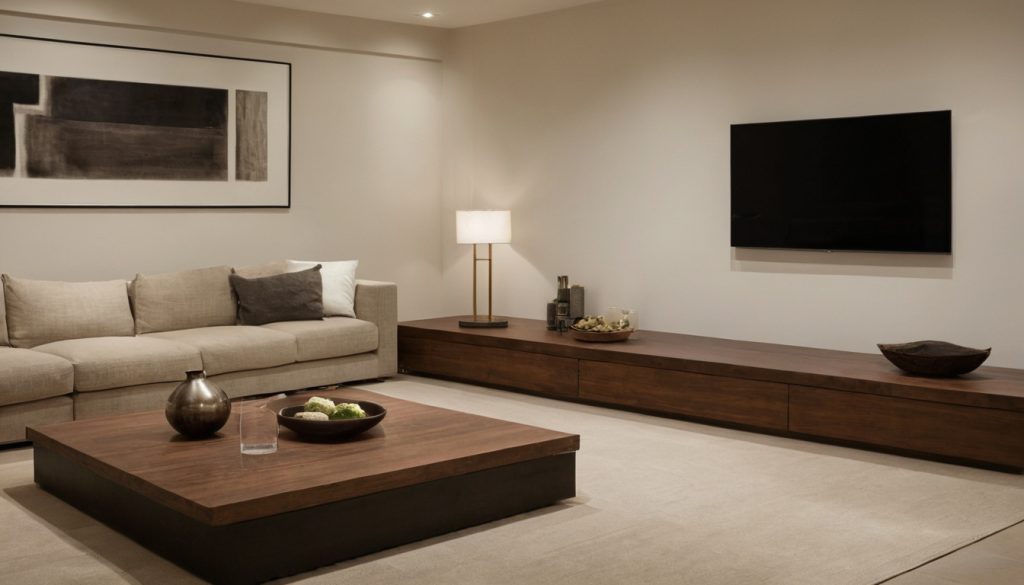
For a US residential fit-out project manager, a visually undersized modern coffee table may be the model that makes the completed living room work. Before ordering for an occupied home, test the table against seated reach, knees, walking routes, rug edges, and delivery access. Every extra inch of surface takes floor space from another task.
Key takeaways
Tabletop size is only part of the fit; the base, edge, rug, and moving furniture can each turn a suitable-looking table into an obstruction.
- Measure the occupied room with doors, recliners, swivel chairs, and repeated walking routes in use.
- Tape the tabletop and base footprints separately. Overhang can conceal legs, runners, or a wide pedestal.
- Buy extra surface only when regular seats can reach it and the added footprint does not pinch circulation.
- Verify glass treatment, load limits, leveling feet, base drawings, and packaged dimensions in current product documents.
- Choose the smallest table that passes the room, rug, delivery, and household-task tests.
Contents
Six practical checks take the decision from room measurements to product verification.
- Measure the occupied living room
- Compare surface area with lost clearance
- Inspect the base and floor-contact points
- Match edges and top materials to household risks
- Test the table on the actual rug
- Run a full-size mock-up before ordering
Measure the occupied living room before sizing a modern coffee table
Before choosing a modern coffee table, map the occupied room rather than the empty floor. Sofa and chair positions, seated reach, knee space, door swing, rug edges, moving furniture, and the walking routes used by the household must control the table footprint.
Set the upholstery and rug first. These living-room decisions to settle before buying a sofa determine how much floor remains for a table. Measure with recliners extended, accent chairs pulled into use, and doors open through their full arcs.
Which room boundaries control coffee-table placement?
Measure from the part that can make contact, not from a convenient wall or furniture centerline. A rolled sofa arm does not define knee clearance; the sofa-front rail or cushion edge does. A swivel chair needs its occupied movement zone measured, not just the width of its feet.
| Boundary type | Plot on the room plan | Why it controls the table |
|---|---|---|
| Fixed | Hearth edge, built-ins, columns, floor registers, outlets, and rug edges | These points cannot move to rescue a table that is too large. Floor registers also need open discharge and service access. |
| Moving | Door arcs, recliner travel, chair fronts, swivel zones, ottomans, and sofa-bed extension | The table may fit while the room is still but block a seat, door, or mechanism during use. |
| Repeated route | The path to a doorway, adjacent room, window, media cabinet, or frequently used chair | A route crossed throughout the day deserves more protection than occasional access for cleaning or maintenance. |
Compact rooms usually fail where movement zones overlap: a door arc meets a chair pullback, or the only walking line passes the table corner. Open-plan rooms can look generous while one narrow route carries nearly all traffic between the seating and the next room. Test movable accent chairs in both their parked and occupied positions.
Households using wheelchairs or other mobility aids should measure the actual device and turning approach. As an accessible-design reference, not a private-home mandate, the 2010 ADA Standards for Accessible Design specify a 30 by 48 inch clear floor space for wheelchair positioning. Individual movement patterns may require a different clear area.
A taped floor template reveals conflicts that product dimensions hide
A tape template should show both the tabletop perimeter and every point where the base meets the floor.
- Place the sofa, chairs, rug, lamps, and ottomans in their normal occupied positions.
- Mark door arcs, recliner extension, floor registers, hearths, rug edges, and the principal walking route with removable painter’s tape.
- Use the selected product’s published length and width to tape the tabletop outline. Mark the base footprint separately from a dimensioned drawing. If the seller provides no base measurements, request them rather than estimating from a photograph.
- Sit in every regular seat. Reach toward the near and far parts of the template without sliding forward or twisting around an armrest.
- Stand up from each seat, walk the main route while carrying an empty tray, move the adjacent chair, and bring the vacuum head around the proposed base.
- Open doors and extend reclining furniture fully. Then test the access needed to lift or carry larger furniture out of the room.
A template that passes those checks establishes the largest workable envelope, not the automatic buying size. Next, decide whether extra tabletop area earns the clearance it consumes.
A larger modern coffee table trades surface area for clearance
A modern coffee table earns extra surface only when seated people can reach it without straining and others can pass without turning sideways. Compare each added inch of top area with the clearance removed from every adjacent seat and route.
A larger modern coffee table trades surface area for clearance shown as an editorial reference for proportion and finish coordination.
| Decision factor | Smaller footprint | Larger footprint |
|---|---|---|
| Usable top area | Usually holds drinks, remotes, and one or two books without much spare room. | Better for board games, shared food, or several place settings, provided those tasks genuinely happen here. |
| Seated reach | Can sit closer to the main sofa while leaving more room at the ends. | May serve more seats, but the center can become unreachable from a deep sofa or sectional corner. |
| Route loss | Preserves more floor around door swings, recliners, and repeated walking lines. | Consumes clearance on every side, not only between the table and sofa. |
| Seats served | Works best for one sofa or a compact sofa-and-chair group. | Can serve a broad sectional or several chairs if the perimeter remains reachable. |
| Product comparison | Enter the exact top length, width, height, and base footprint from current manufacturer drawings. | Do not compare estimated dimensions taken from room photographs. |
How much tabletop can each seat actually reach?
Practical reach matters more than visual centering. Sit in every normal position with the back against the cushion, then place a cup on the near edge, center, and far side. A person should not need to slide forward, twist from a sectional corner, or brace a hand on the table to reach routine items.
Deep sofas and lounge chairs increase the gap between the sitter and the table. Limited trunk mobility makes that penalty more serious. Test with the cushions compressed by the intended user; an unloaded cushion does not represent working seat height or reach.
Wirecutter’s coffee-table review reports that most experts it consulted favored a top near sofa-seat height or up to a couple of inches lower. That is product-review guidance, not code. Wirecutter considered 14-inch, 16-inch, and 18-inch seating contexts, but those setups do not establish universal clearance dimensions.
- List the actual tasks: drinks, books, games, meals, or occasional foot support.
- Mark the area each task requires with the real objects.
- Reject unused surface that costs a working route.
- Check whether each regular seat reaches at least one useful part of the top.
Rectangular, round, square, and nesting tables spend floor area differently
Rectangular tables stretch a useful edge along a sofa but can project into routes at both ends. Round tables remove corners from close paths, though their curved edge provides less usable area near the perimeter. Square tables suit compact, balanced seating groups but can waste reach at the center. Nesting tables keep the daily footprint small and add temporary surfaces where a sitter needs them.
Compare real candidates only after manufacturer sheets provide exact top dimensions, base dimensions, height, weight, and nesting extension. A top can pass the reach test while its legs or plinth fail it, making the coffee-table base the next procurement question.
The coffee-table base controls knee room, stability, and cleaning access
The base of a modern coffee table controls toe room, knee encounters, stability, vacuum access, and how weight reaches the rug or floor. In homes with children, pets, reclining seats, or uneven flooring, examine base geometry and verified assembly details separately before ordering.
Inset legs protect routes but can reduce usable support
Inset legs keep feet and ankles away from the table perimeter, which helps where a walking route passes close to the top. The trade-off is overhang. A wide top supported by a narrow frame may flex, rock, or feel vulnerable when someone presses on an unsupported edge, depending on the top material, joints, and permitted load.
Request a current manufacturer drawing that shows the top overhang, base footprint, clear leg spacing, stretcher position, and every floor-contact point. For a cantilevered top, also confirm the permitted load distribution. Overall width and depth cannot reveal whether a sitter’s knees will meet a stretcher or whether an edge load will lift the opposite side.
Four-leg frames usually leave an open center for shoes and vacuum heads, but corner legs can occupy the exact space used to stand up from a sofa. Nesting tables need another test: pull each table out, rotate it, and return it without crossing the main route or striking the larger table’s frame.
Pedestal and sled bases create different toe and rug-pressure zones
A pedestal concentrates support near the center and can clear the corners, yet a broad pedestal may block toes beneath the table. Stability depends on the base dimensions, product weight, top overhang, fasteners, and floor conditions. The pedestal label alone proves nothing.
A sled base spreads floor contact along rails. Those rails can stabilize the table on a consistent surface, but they may catch a rug edge or block a vacuum head. A plinth base creates an even larger contact zone and leaves little cleaning access beneath it. Casters improve movement only when their locks, floor compatibility, mounting method, and load rating suit the selected table.
Adjustable feet only help when the product specification confirms them
Adjustable feet can correct minor differences between floor-contact points, but buyers should not assume leveling hardware is included. Verify the adjustment range, pad material, thread or mounting method, and replacement availability in the current specification.
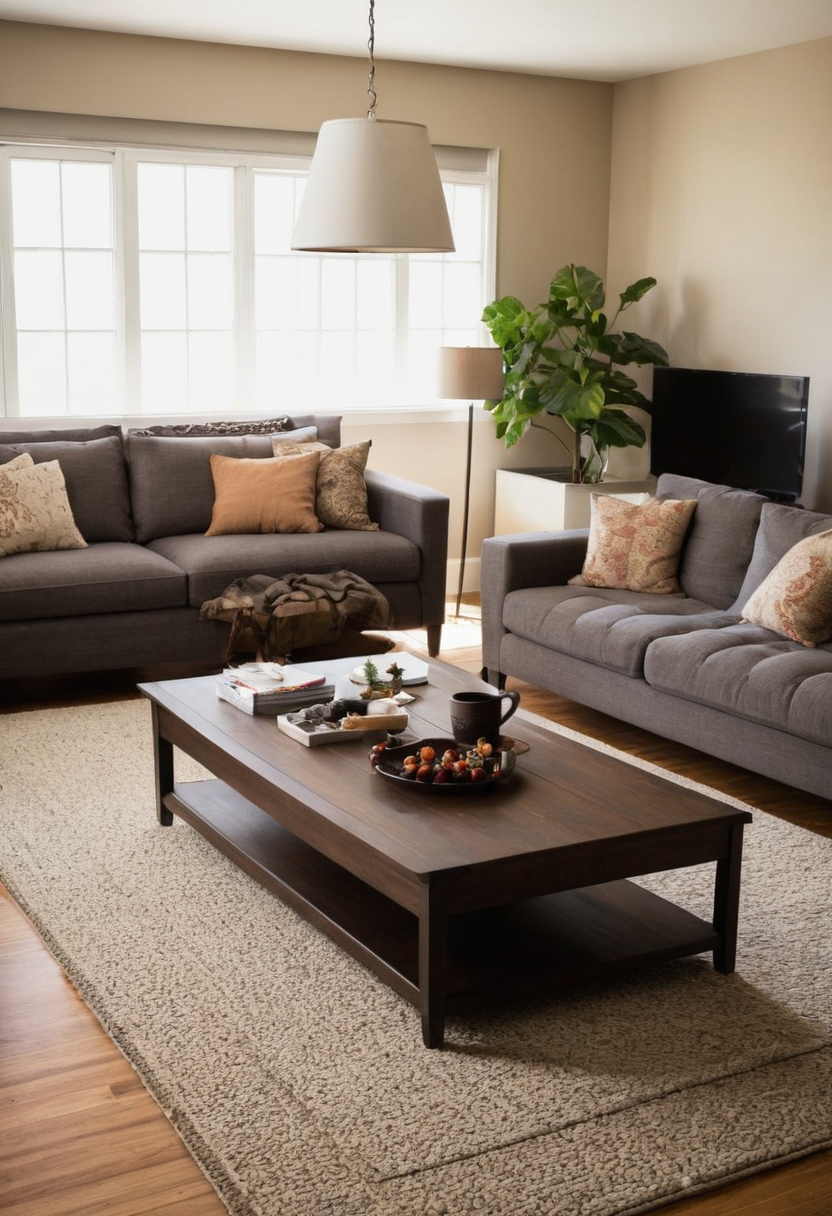
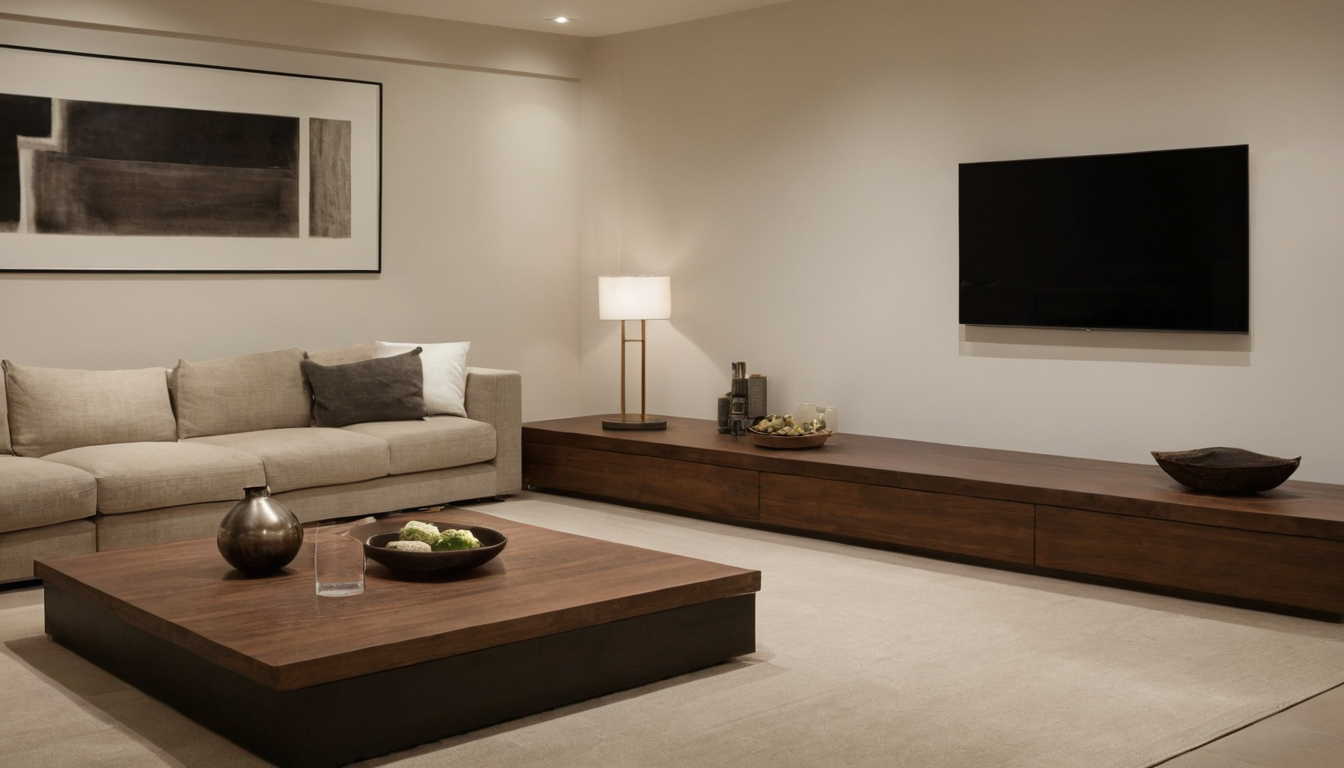
The coffee-table base controls knee room, stability, and cleaning access shown as an editorial reference for proportion and finish coordination.
Before purchase, confirm product weight, stated load limit, assembly sequence, fastener type, warranty conditions, and any applicable furniture performance standard whose scope explicitly includes residential coffee tables. Test the proposed base on the floor or rug where it will stand. Once the base passes, check whether the coffee-table edges and top match the household’s collision and breakage risks.
Coffee-table edges and tops should match the household's collision and breakage risks
The edge and top of a modern coffee table should match the household’s collision and breakage risks. Rounded profiles soften ordinary bumps, while glass, stone, solid wood, and veneer need material-specific checks for support, heat, damage, and loading under the manufacturer’s stated residential-use conditions.
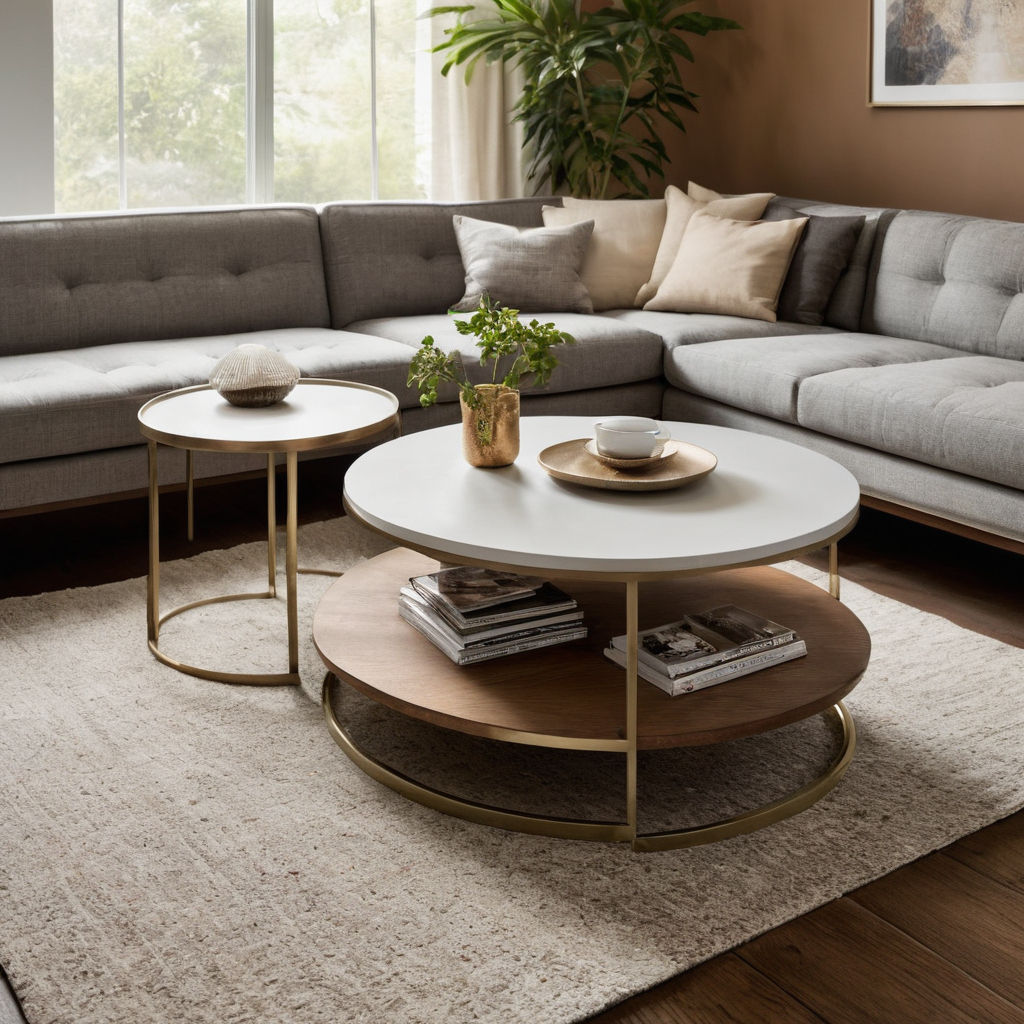
Coffee-table edges and tops should match the household's collision and breakage risks shown with finish, fixture, and clearance relationships visible.
- Frequent contact: Favor rounded corners where children play, older adults need steady routes, lighting is low, or a recliner moves close to the table.
- Stone: Confirm slab support, sealing needs, heat precautions, and cleaning instructions. The Natural Stone Institute warns that abrasive powders and creams can scratch natural stone.
- Solid wood: Check the maker’s limits for hot dishes, standing moisture, and seasonal movement.
- Veneer or laminate: Inspect exposed seams and edge bands, then follow the stated heat, moisture, and loading limits.
- Glass: Require written details for glass type, thickness, edge finish, support points, load limit, and replacement terms.
Tempered glass must be verified in the product specification
A clear top does not reveal whether the glass is tempered, heat-strengthened, laminated, or annealed. Product documentation must identify the treatment and any applicable test standard. It should also show how the panel bears on the frame, whether pads or fasteners restrain it, and which loads the assembled table is designed to carry.
Do not infer safety performance from thickness, weight, polished edges, or the retailer’s photographs. If the current specification omits the glass treatment or replacement policy, ask the manufacturer before purchase rather than filling the gap with an assumption.
Rounded corners matter most where routes pass close to the table
Corner shape should follow contact likelihood, not a universal style rule. Trace the route past the sofa, recliner, doorway, and lamp switch. A hard square corner deserves extra clearance where knees, hips, or small heads regularly pass; a generous radius is less critical on an edge outside normal movement.
After the edge profile passes that contact check, test the floor below it. Will the modern coffee table rock, snag, or crush the rug edge?
A modern coffee table should not rock, snag, or crush the rug edge
A modern coffee table should sit on a rug only when every foot, runner, or plinth is fully supported and the rug stays flat during daily use. On thick, soft, fringed, or layered rugs, test rocking, impressions, edge catching, and the effort needed to reposition the table before accepting the placement.
Straddling a rug edge can make the coffee table unstable
A rug and pad raise part of the base above the exposed floor. That mixed support can make a rigid frame rock and place more weight on fewer contact points.
- Pass: All four legs stand on the rug, or all four stand on the floor, and the table remains level when pressed at each corner.
- Pass: Both sled runners rest fully on the same surface. A plinth or broad pedestal also needs continuous, level support beneath its contact area.
- Retest: A pedestal foot approaches the rug edge, or soft pile lets the top move under hand pressure. Rotate or reposition the table, then check again after the rug has settled.
- Reject: One leg, runner, or section of a plinth bridges the edge, the top rocks, or concentrated feet leave unacceptable impressions.
Protective cups or pads may spread contact, but use only products compatible with both the rug fiber and the floor finish. Check the rug maker’s care instructions before adding pads, rotating the rug, or treating indentations.
Rug fringe and raised edges need a movement test
Fringe, binding, and layered rug edges can catch a narrow foot or sled during cleaning. Do not assume every edge will snag. Test the actual pairing.
Empty the tabletop, lift rather than drag, and move the table across the edge in the direction used for vacuuming or furniture access. Reject the placement if fringe enters a joint, the binding folds, or the base pulls the rug. Once the rug test passes, choose the smallest modern coffee table that also passes the full room test.
Choose the smallest modern coffee table that passes the room test
The best modern coffee table is the smallest model that supports the household’s real tasks without compromising the measured room. Before purchase, tape out the top and base, rehearse sitting and walking, check delivery access, then verify dimensions, weight, load limit, feet, assembly, care, warranty, returns, and packaging on the current product sheet.
A full-size floor mock-up is the final clearance test
Mark the tabletop perimeter with painter’s tape. Mark the base separately because an inset pedestal, wide sled, or projecting leg changes the toe space. Add cardboard at the stated height if the table could interfere with knees or sightlines.
- Sit in every seat and reach for a cup without leaning onto the table.
- Stand up without striking the edge or base.
- Walk each normal route while another person remains seated.
- Repeat while carrying a tray, laundry basket, or vacuum.
- Rehearse rug cleaning and the movement needed to shift nearby furniture.
Compare two shortlisted products against the same tape layout. Record which seats each model serves and which routes it narrows. More top area does not justify a model that fails a repeated household task.
Product dimensions are incomplete without the base footprint and packaged size
Use one worksheet for both models:
- top length, width, and height;
- base footprint, overhang, edge profile, and floor-contact points;
- assembled weight, stated load limit, fasteners, and assembly steps;
- finish care, warranty, and return rules for opened, assembled, damaged, or custom-finish goods;
- carton dimensions, packaged weight, and separate component sizes.
Measure doors, corridors, elevators, stairs, corners, and the final room entrance. If the listing omits a base drawing or package size, request the current technical sheet from the seller or manufacturer before ordering. Apply the same independent test to package deals that may create fit problems in coordinated living-room sets. Buy the smallest verified model that passes the mock-up, delivery route, specification, and return-term checks.
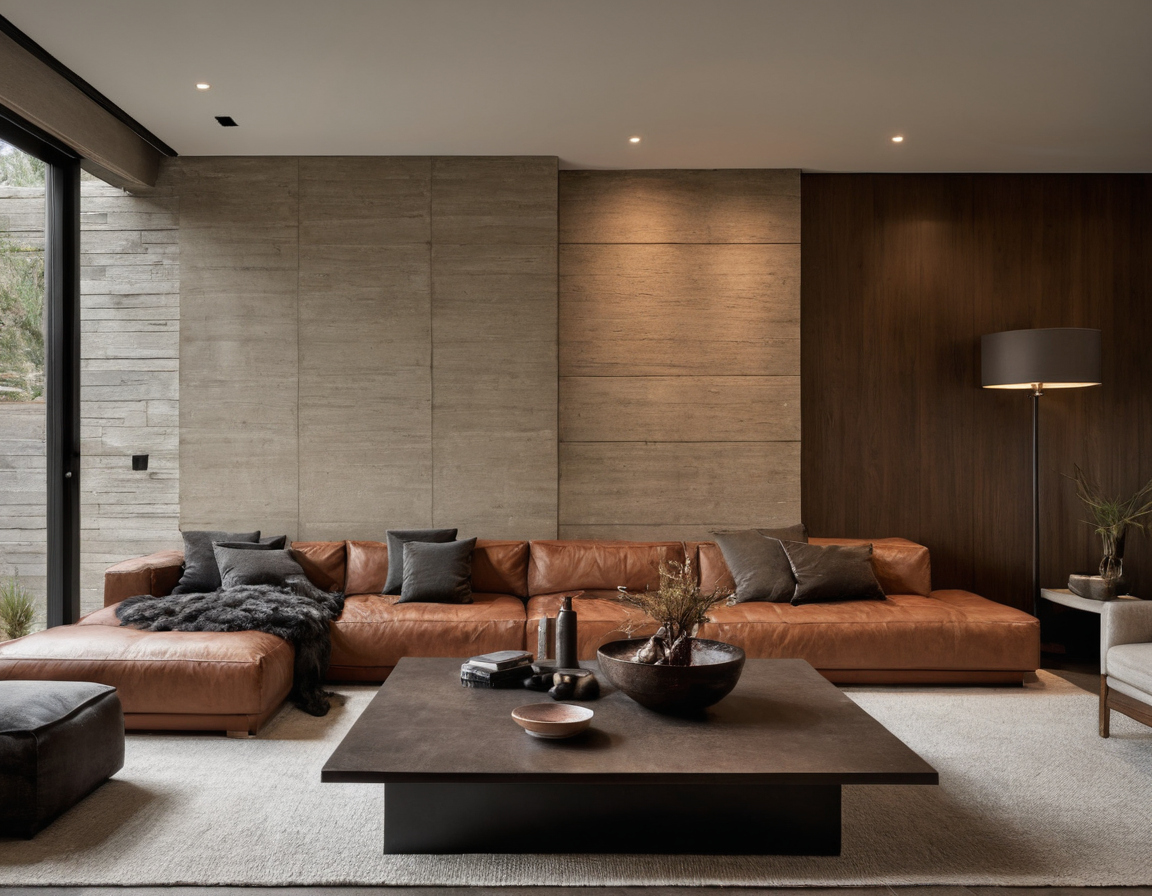
Choose the smallest modern coffee table that passes the room test shown as an editorial reference for proportion and finish coordination.
Frequently asked questions
These answers turn common coffee-table sizing questions into checks you can repeat in the actual room.
How far should a modern coffee table sit from a sofa without blocking the walking route?
Use seated reach and the adjacent walking route to set the gap rather than copying one universal dimension. Tape the proposed table, sit against the sofa back, stand up, and have another person walk the route. Increase the gap or reduce the table if knees meet the edge or the passer must turn sideways.
Should a modern coffee table be lower than, level with, or higher than the sofa seat?
A top near the compressed sofa-seat height or slightly lower is a practical starting point, not a rule. Test the intended users and tasks. Meals, games, limited mobility, deep cushions, and thick rugs can change which height works.